

By Dr. Sreek Cherukuri, Board-Certified Ear, Nose, and Throat Surgeon
In this post, we’ll discuss how hearing loss and dementia are connected, how a 500,000 person study concluded hearing loss increases dementia risk and cover options for addressing hearing loss effectively and inexpensively.
Let’s get started.
Trouble hearing isn’t just about missing out on conversations—it can also affect how your brain works. As we get older, our hearing often worsens, and new research shows that untreated hearing loss may raise the risk of developing dementia.
The good news? Using hearing devices early can help protect your mind by keeping your brain engaged and your social life active.
The Hearing–Dementia Connection
Hearing loss is more than an ear problem; it can set off a chain of events that affects the brain:
- Cognitive Load Hypothesis: When hearing is poor, your brain works extra hard to fill in missing sounds. Over time, this chronic effort can drain mental resources and accelerate memory and thinking problems.
- Auditory Deprivation & Brain Atrophy: Lack of regular sound input can lead to shrinkage in the auditory cortex and related memory centers, as seen in brain imaging studies.
- Social Isolation: Difficulty following conversations often causes people to skip social events. Reduced social engagement cuts down on brain stimulation, which speeds up cognitive decline.
- Population Impact: U.S. data suggest that up to 32% of new dementia cases could be linked to audiometrically measured hearing loss.
By addressing hearing loss early, you can help break this cycle and give your brain the stimulation it needs to stay sharp.

What Is Age-Related Hearing Loss?
Age-related hearing loss (presbycusis) happens when tiny hair cells in the inner ear wear down over time. It usually affects both ears and makes high-pitched sounds—like birds chirping or women’s voices—harder to hear.
- Prevalence increases with age: After 40, the chance of hearing loss roughly doubles every decade.
- Early signs: Asking people to repeat themselves, turning up the TV volume, or trouble following conversations in noisy places.
- Types:
- Conductive: Sound can’t get through the outer or middle ear.
- Sensorineural: Damage to inner-ear hair cells or nerves.
- Mixed: A combination of both.
Untreated hearing loss can lead to frustration, fatigue from straining to listen, and withdrawal from social activities—all factors that indirectly affect brain health.
Key Findings from Recent Studies
JAMA Prospective Cohort (573,088 adults):
A nationwide study of Medicare beneficiaries (mean age 60.8 years; 52% women) followed for an average of 8.6 years found significant links between measured hearing loss and dementia risk:
– Each 10 dB increase in audiometric hearing threshold raised dementia risk by 7% (adjusted HR 1.07; 95% CI, 1.04–1.11).
– Participants with severe hearing loss had a 20% higher risk (HR 1.20; 95% CI, 1.09–1.32) versus those with normal hearing.
– Those not using hearing aids faced a 20% increased risk (HR 1.20; 95% CI, 1.13–1.27), compared with only a 6% rise for hearing-aid users (HR 1.06; 95% CI, 1.01–1.10).
MedPage Today U.S. Community Cohort (2,946 older adults):
In a prospective study of community-dwelling seniors (mean age 75 years) tracked over eight years:
– 66.1% had clinically significant hearing loss by audiometry, but just 37.2% self-reported it.
– Dementia developed in 9.9% of those with measured hearing loss versus 4.7% with normal hearing.
– Population attributable fraction (PAF) for audiometric loss was 32.0%, indicating nearly one in three new dementia cases could be linked to measurable hearing impairment.
– PAF by severity: mild loss (25–40 dB) contributed 16.2%, moderate/severe loss (>40 dB) contributed 16.6%.
– PAF was higher in those ≥75 years (30.5%), women (30.8%), and White participants (27.8%).
Nature Medicine (15,000 adults):
Dementia Risk to Double by 2060. A 55 year old has a 36% chance of developing dementia. 514,000 American adults developed dementia in 2020, and that number is expected to exceed 1 million adults in 2060 as the US population ages.
These robust, audiometry-based findings highlight hearing loss as a major, modifiable factor in dementia risk—much more so when measured objectively rather than by self-report.

How Hearing Aids Can Slow Cognitive Decline
Hearing aids do much more than simply turn up the volume. By restoring clear sound, they help lighten the brain’s load and keep you connected:
- Reduce cognitive strain: When sounds are crisp, your brain spends less effort guessing missing words. Over time, this eases mental fatigue and preserves memory resources.
- Boost social engagement: Hearing-aid users are likelier to join conversations and social events. Staying socially active provides essential mental stimulation and wards off loneliness, a known dementia risk factor.
- Adapt and train your brain: Modern devices offer programs that gradually teach your brain to process sounds more efficiently—reinforcing neural pathways in hearing centers.
- Advanced sound features: Directional microphones focus on voices in noisy places; noise-reduction algorithms cut background chatter; Bluetooth streaming connects you to phones or TVs.
- Landmark trial data: The ACHIEVE trial reported a 48% slower rate of cognitive decline in high-risk adults using hearing interventions versus controls.
With proper fitting and consistent use, hearing aids let you spend less time straining and more time engaging—keeping your brain active and healthy.
Choosing the Right Hearing Solution: The PAL and Beyond
When it comes to FDA-registered hearing devices, three common form factors are:
Behind-the-Ear (BTE) Hearing Aids
How they work: Components sit behind the ear, connected to an earmold or dome via tubing.
- Pros: Amplification for mild to moderate loss with OTC and up to profound with prescription; longer battery life; room for extra features (Bluetooth, telecoil); durable.
- Cons: Cost, More visible; tubing can collect moisture/earwax; wind noise can occur.
Completely-in-Canal (CIC) Hearing Aids
How they work: Tiny devices fit deep in the ear canal, nearly invisible.
- Pros: Discreet; natural sound direction; minimal wind noise.
- Cons: Limited volume; Limited features; smaller battery; prone to earwax buildup. Need high dexterity, uncomfortable for many ears.
Personal Amplified Listening (PAL) Devices
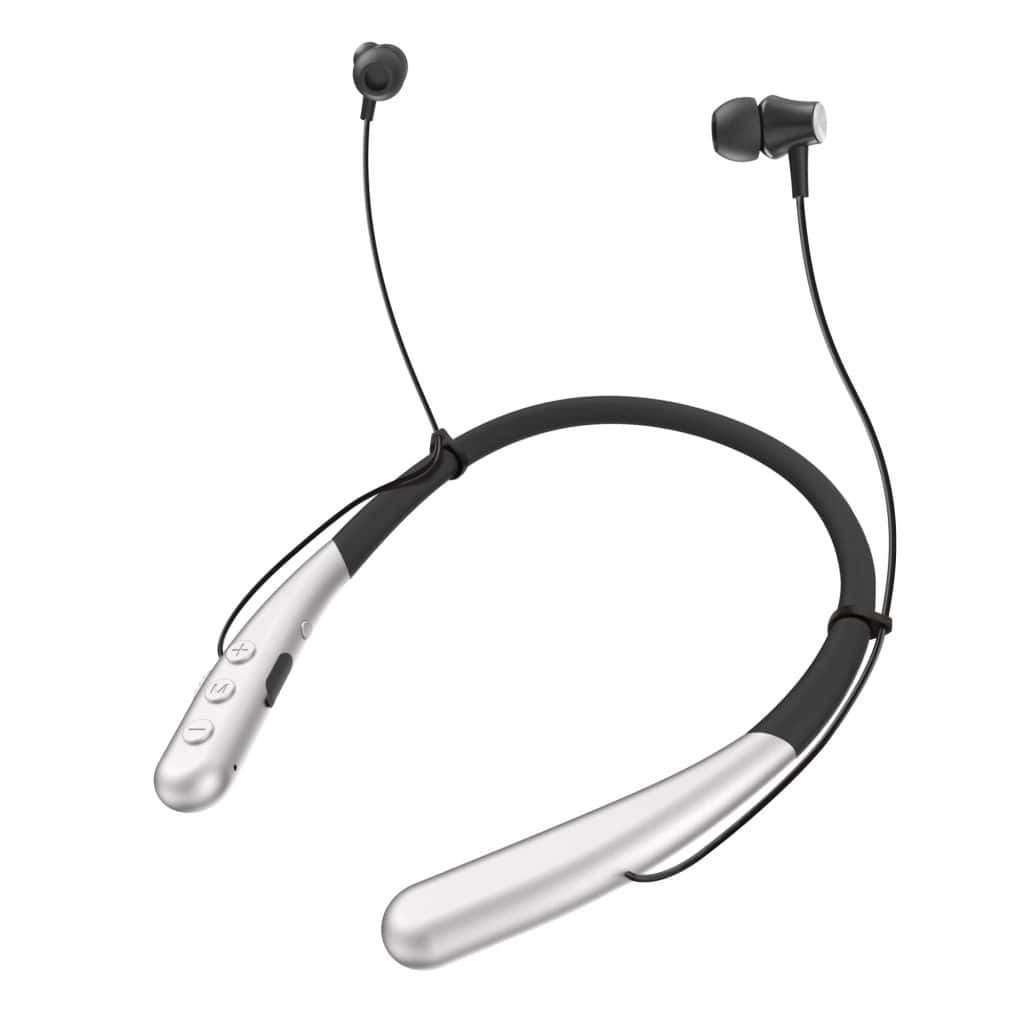
How they work: The ClearCast PAL™ is an FDA-registered device designed by ENT surgeon Dr Sreek Cherukuri. It uses a neckband form factor with attached earbuds for quick and easy use.
- Pros: Covers mild to severe loss; easy to use, no-clinic fitting; slim, discreet; easily adjusted controls, looks like a tech product as opposed to a disability product.
- Cons: Not custom-tuned by an audiologist; lack auto-environment adjustments in prescription BTE aids.
Choosing your device:
Dr Cherukuri, the inventor of the ClearCast PAL™ recommends you get tested whenever possible to ensure your hearing loss isn’t earwax related or another issue. Choose a device that matches your lifestyle, assess how much dexterity is needed and factor cost & support.
High dexterity is needed for CIC hearing aids, medium/normal dexterity for BTE aids and almost anyone can use the ClearCast PAL™.
Protect Your Brain by Caring for Your Hearing
Untreated hearing loss is a modifiable risk factor for dementia. The sooner you take action, the more you help your brain stay active and sharp:
- Get your hearing tested: A simple, painless audiogram gives you a clear picture of your hearing health.
- Try a hearing device: Whether it’s a custom hearing aid or the ClearCast PAL™, a proper fit makes hearing easier and more comfortable.
- Use it daily: Wearing your device regularly keeps your brain engaged and reduces the chance of isolation.
- Stay socially active: Join conversations, meet friends, and keep your mind working.
- Follow up: Work with an audiologist to fine-tune your device and check your progress.
Protecting your hearing isn’t just about sound—it’s about preserving your memory, your relationships, and your quality of life.
Learn more about how the ClearCast PAL™ can fit into your daily routine and help guard your cognitive health.
Don’t allow hearing loss and dementia to creep up on you. Take charge of your hearing today, and give your brain the care it deserves.
References
- Harvard Health Publishing. Want to reduce your risk of dementia? Get your hearing checked today. https://www.health.harvard.edu/blog/want-to-reduce-your-risk-of-dementia-get-your-hearing-checked-today-202302162891
- NCBI PMC. Auditory deprivation & brain atrophy study. https://www.ncbi.nlm.nih.gov/pmc/articles/PMC3277836/
- MedPage Today. Hearing loss and the connection to dementia. https://www.medpagetoday.com/neurology/dementia/115179
- NCBI PMC. JAMA prospective cohort analysis. https://www.ncbi.nlm.nih.gov/pmc/articles/PMC10767640/
- Patient Care Online. One-in-three cases of dementia attributable to hearing loss. https://www.patientcareonline.com/view/one-in-three-cases-of-dementia-may-be-attributable-to-hearing-loss-population-based-study
- Medical Xpress. Hearing loss in older adults linked to dementia. https://medicalxpress.com/news/2025-04-loss-older-adults-linked-dementia.html
- NIH Research Matters. Hearing aids slow cognitive decline in people at high risk. https://www.nih.gov/news-events/nih-research-matters/hearing-aids-slow-cognitive-decline-people-high-risk
- Nature Medicine : Lifetime risk and projected burden of dementia. https://www.nature.com/articles/s41591-024-03340-9